

Zone 2 cardio for women over 40 has gone from a niche performance concept to a full-blown wellness trend and if you have been anywhere near a fitness podcast, an influencer or a Peter Attia clip in the last two years, you would have heard about it. The promise is compelling: train at a conversational pace, burn fat, improve your heart, live longer.
What is not being said loudly enough is where Zone 2 fits in the bigger picture and where it absolutely does not replace the thing that matters most for women in midlife.
Spoiler: that thing is strength training. And no amount of zone 2 cardio changes that.

What Is Zone 2 Cardio for Women Over 40?
Zone 2 cardio for women over 40 is sustained aerobic exercise performed at a low enough intensity that you could hold a conversation which roughly 60 to 70 percent of your maximum heart rate. Think a brisk walk, an easy bike ride or a light jog where you are breathing harder than normal but could still speak in full sentences.
The term comes from a five zone heart rate training model used by endurance athletes. Zone 1 is very light movement. Zone 2 is the aerobic base which is the effort level that improves fat oxidation and builds cardiovascular efficiency over time. Zones 3 through 5 are progressively harder, from moderate effort up to all out sprinting.
The research behind Zone 2 is legitimate. Sustained low intensity aerobic training does improve metabolic flexibility and cardiovascular health markers which all matter for longevity and energy. The longevity medicine community, led by voices like Peter Attia, has done a good job of bringing this research into mainstream conversation.
What got lost in the translation from medical podcast to wellness trend is the context. Zone 2 was never meant to stand alone.
Why Has Zone 2 Cardio Become So Popular With Women in Midlife?
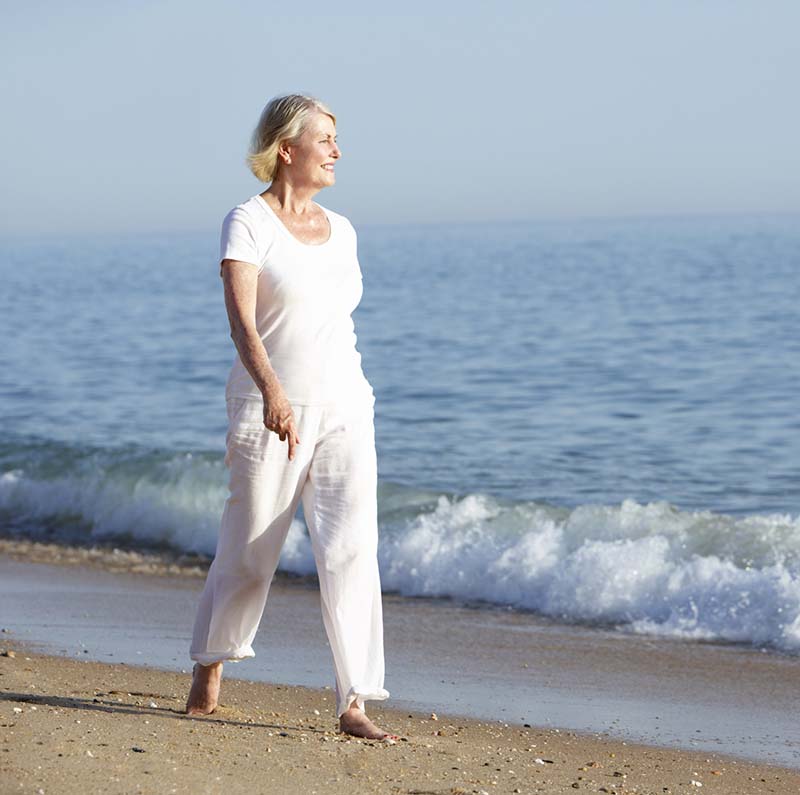
Zone 2 cardio has become popular with women in midlife because it sounds manageable and after years of being told that exercise has to be brutal to count, a prescription for long walks and easy bike rides feels like permission to finally do something sustainable.
The perimenopause connection also makes sense on paper. During perimenopause, cortisol regulation becomes more important, high-intensity exercise can spike stress hormones, and recovery takes longer. Zone 2 is positioned as a lower-stress alternative that still moves the health needle. That is not wrong. But it is incomplete.
The other driver is the GLP-1 wave. Women on semaglutide and tirzepatide are looking for exercise strategies that work with a suppressed appetite and lower energy. Zone 2 feels accessible when you are not eating much. But again, accessible is not the same as sufficient.
The wellness industry has a remarkable ability to take a genuinely useful concept and strip it of all its nuance by the time it reaches your Instagram feed. Zone 2 cardio is not a weight loss strategy. It is not a muscle preservation strategy. And it is not a replacement for lifting. It is one useful tool in a complete approach but right now it is being sold as the whole toolbox.
What Does Zone 2 Cardio Actually Do for Women Over 40?
Zone 2 cardio for women over 40 genuinely improves cardiovascular efficiency, mitochondrial function and metabolic flexibility; meaning your body gets better at using both fat and carbohydrates as fuel. These are real, meaningful benefits for longevity and energy.
Here is what the research actually supports:
These are worth having. Zone 2 is a legitimate part of a complete fitness approach. The issue is what it cannot do and that list is just as important.
What Can’t Zone 2 Cardio Do for Women in Midlife?
Zone 2 cardio cannot build or preserve muscle mass. This is the non-negotiable!!
Muscle is the organ that drives your metabolism, protects your bones, regulates your blood sugar and determines how you look and feel as you age through perimenopause and beyond. Low-intensity aerobic work does not provide the mechanical tension required to signal muscle protein synthesis. It does not tell your body to keep the muscle it has.
For women in their 40s and 50s who are already dealing with accelerated muscle loss driven by declining estrogen, this matters enormously. Doing Zone 2 cardio instead of strength training is not a neutral trade. It is actively moving in the wrong direction.
Zone 2 also cannot:
None of this makes Zone 2 bad. It makes it incomplete as a standalone strategy and that distinction is exactly what is getting lost right now.
Where Does Zone 2 Cardio Fit in a Strength Training Program for Women?
Zone 2 cardio fits best as a complement to strength training, not a replacement for it. The most effective approach for women over 40 is to build your fitness plan around strength training first, and add Zone 2 as a secondary layer for cardiovascular health and recovery support.
A realistic structure that works well for most women in midlife:

Zone 2 on non-lifting days works particularly well because it promotes active recovery without adding significant training stress. A 45-minute walk after a rest day is genuinely useful. A 45-minute walk instead of a strength session is a missed opportunity.
For women on GLP-1 medications, Zone 2 can be especially useful because it is sustainable on lower energy days and supports cardiovascular health without taxing recovery capacity. But the strength training still has to happen; muscle preservation on a GLP-1 requires resistance training, full stop.
Why Does Strength Training Still Win for Women Over 40?

Strength training still wins for women over 40 because it is the only form of exercise that directly addresses the three most pressing physical changes of midlife: muscle loss, bone density decline and metabolic slowdown. Zone 2 cardio does not touch any of those three in a meaningful way.
Estrogen decline in perimenopause accelerates the loss of both muscle and bone. Strength training, specifically progressive resistance training that challenges the muscles with increasing load over time, is the evidence backed intervention for both. The research on this is not ambiguous. Women who lift consistently in midlife have measurably better body composition, bone density, metabolic rate and functional strength than those who do not.
There is also the practical reality of how women in their 40s and 50s actually spend their time. Most of my clients have limited training windows, two to four sessions per week is realistic for the vast majority. In that context, strength training has to be the priority. Zone 2 is easier to weave into daily life such as a walk here, a bike ride there. It does not require a gym, a program or a dedicated window the way strength training does.
Do Zone 2 in your daily life. Do strength training in your dedicated training time.
That is the hierarchy that gets results.
The Bottom Line
Zone 2 cardio for women over 40 is a legitimate, research-backed tool for cardiovascular health and longevity and it deserves a place in your routine. But it is not the foundation. It is not a weight loss strategy. It is not a replacement for lifting, and it is not going to preserve the muscle your body is working to hold onto through perimenopause.
The wellness industry has a habit of taking something useful and selling it as the solution. Zone 2 is useful. Strength training is the solution for body composition, for bone density, for metabolism, for how you feel at 50, 60, and beyond. Zone 2 sits on top of that. Not instead of it.
Build the foundation first. Add the cardio on top. Your body will tell the difference.
If you want a program that puts strength training where it belongs and builds everything else around it, that is exactly what I do. Learn more about Online Coaching or grab my free How to Begin Strength Training guide if you are just getting started.
Frequently Asked Questions About Zone 2 Cardio for Women Over 40
What is Zone 2 cardio and is it good for women over 40?
Zone 2 cardio is sustained low-intensity aerobic exercise performed at 60 to 70 percent of your maximum heart rate which is an effort level where you can hold a conversation. It is good for women over 40 for cardiovascular health and metabolic flexibility. It is not, however, a substitute for strength training, which remains the most important form of exercise for women navigating perimenopause and beyond.
How much Zone 2 cardio should women in perimenopause do?
Two to three Zone 2 sessions per week of 30 to 60 minutes is a reasonable target for women in perimenopause, ideally on non-lifting days to support active recovery. This can include brisk walking, easy cycling or light swimming. The key is keeping the intensity low enough that you can hold a full conversation throughout.
Can you do Zone 2 cardio on a GLP-1 medication?
Yes. Zone 2 cardio is well-suited for women on GLP-1 medications because it is sustainable on lower energy and appetite days. However, strength training remains essential on GLP-1 medications to prevent muscle loss, which is a significant risk when calories and protein intake drop. Zone 2 complements a GLP-1 protocol but does not replace the muscle preservation that only resistance training provides. You can find a free guide on GLP-1 medications and strength training here.
What is the difference between Zone 2 cardio and HIIT for women over 40?
Zone 2 cardio is sustained low-intensity effort that builds aerobic base and mitochondrial health with a lower cortisol response, generally more appropriate for daily use in midlife. HIIT is high-intensity interval training that produces a stronger hormonal response and higher caloric burn in a shorter time, but it also requires more recovery and can elevate cortisol. For women in perimenopause managing stress and recovery, a higher ratio of Zone 2 to HIIT is typically recommended, but as always, strength training takes priority over both.
Should women over 40 do Zone 2 cardio or strength training?
Women over 40 should prioritize strength training first and add Zone 2 cardio as a complement, not a replacement. Strength training addresses the three most critical physical changes of midlife which are muscle loss, bone density decline and metabolic slowdown. Zone 2 supports cardiovascular health and recovery. Both have a place, but strength training is the non-negotiable foundation.
Does Zone 2 cardio help with weight loss in perimenopause?
Zone 2 cardio alone is not an effective weight loss strategy for women in perimenopause. It burns calories during the session but does not build the lean muscle mass that drives resting metabolic rate. Body composition changes in perimenopause respond most effectively to a combination of consistent strength training, adequate protein intake, and overall caloric balance not low-intensity cardio on its own.
Is walking considered Zone 2 cardio?
A brisk walk can qualify as Zone 2 cardio for most women, particularly those who are less conditioned or are in perimenopause where heart rate response to exercise can be higher. The test is whether you can hold a full conversation without gasping, and if you can, you are likely in Zone 2. For more conditioned women, a faster pace, incline, or light jog may be needed to reach the Zone 2 heart rate range.
 Rep Ranges for Women: The Proven Truth About Why Exact Numbers Don’t Matter