
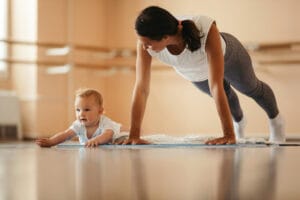
Postpartum exercise is one of the most common topics new moms search for and one of the most confusing. Everyone has an opinion, the 6-week clearance feels both too soon and too vague, and your body doesn’t come with a instruction manual. Here’s a straightforward checklist to help you figure out when the time is actually right for you.
Here’s a quick checklist to help you decide when postpartum exercise is right for you:
- You have approval from your doctor to begin an exercise routine. Even if you had the general okay from your doctor at your 6-week appointment, it is still good practice to discuss the specifics of what you plan to do.
- You are NOT experiencing any pain, discomfort, leaking, bulging, pulling or pressure. If you have any of these symptoms, this does not mean you can’t return to exercise, but you may want to work with a pelvic health physical therapist to address any issues prior to starting an exercise routine.
- You have a block of time to start short workouts. Your exercise routine may not (and most likely will not) look like it did pre-kids, but you can get an effective workout in a short time.
- You are sleeping enough to adequately recover from your workouts. What is ‘enough’ may vary from person to person, but I recommend 7+ hours. Now, with a new baby that may be close to impossible to get 7 hours straight, but see if you can get in a nap to add more sleep to your day. Of course, maybe you feel that 6-6.5 hours of sleep is going to be ‘enough’ for now. Less than 6 hours of sleep on top of a fitness routine may work against your health goals. Adequate sleep is essential for postpartum exercise recovery.
- You have the energy to complete your postpartum exercise sessions. I also want you to feel more energized after a workout instead of drained. If workouts are too hard, you may feel exhausted later in the day or the next day.
- You have asked those around you for support so you can return to a regular exercise routine. This may be a spouse, family member, neighbor, friend or hired help. Don’t be afraid to ask for time for yourself. If you need help with how to ask for help, let’s chat.
- What about exercise and breastfeeding? First and foremost, and this will likely be painfully obvious, it’s best to breastfeed before you work out. No one wants to run three miles with full breasts. Another point in favor of a pre-workout feeding session: some women notice that their babies have a reaction to their milk right after vigorous exercise because of changes in the makeup of the milk. Working out can temporarily alter the levels of lactic acid, and while it won’t affect the nutritional value of your milk, it can have an impact on the taste. Be sure to invest in a supportive sports bra (your chest will thank you). And drink more fluids (an extra glass of water before and after your exercise session should do it). The American College of Obstetricians and Gynecologists has guidance on exercise while breastfeeding for those who want additional medical context.
Returning to postpartum exercise doesn’t have to be overwhelming. If you want a program that’s built around where your body actually is right now, not a generic postpartum plan, prenatal and postpartum training is exactly what I specialize in. You can also check out postpartum fitness goals if you’re still figuring out where to start.
FAQs
The standard medical guideline is 6 weeks postpartum for vaginal deliveries and longer for C-sections, but your 6-week appointment clearance is general not specific to the type of exercise you want to do. Before returning to anything beyond gentle walking, make sure you have no pain, leaking, pressure, or bulging during movement, you’re sleeping enough to recover, and you have enough energy to complete a workout without feeling drained afterward.
If you experience any pain, incontinence, pelvic pressure, or bulging during movement, your body is signaling it needs more time or targeted rehabilitation before returning to exercise. These symptoms don’t necessarily mean you can’t exercise at all, but they do mean you should work with a pelvic health physical therapist before starting a fitness routine.
Aim for at least 7 hours total, even if it comes in broken stretches with naps throughout the day. Less than 6 hours consistently can work against your recovery and health goals by keeping cortisol elevated, slowing muscle repair, and increasing injury risk. If consistent sleep is impossible, keep exercise intensity low until your sleep improves.
Yes. The main considerations are timing and hydration. Feed before you work out to avoid discomfort and potential changes in milk taste from elevated lactic acid after intense exercise. Drink extra fluids, at least one additional glass of water before and after your session, and invest in a supportive sports bra. Exercise does not negatively affect the nutritional value of breast milk.
Walking is the safest starting point for almost all postpartum women. From there, gentle core re-connection work targeting the transverse abdominis and pelvic floor is the foundation before returning to anything more intense. Avoid traditional crunches, heavy lifting, and high-impact activity until you’ve rebuilt core stability and confirmed you have no pelvic floor dysfunction.
It varies significantly depending on the type of delivery, whether you had complications, your fitness level before and during pregnancy, and how well you sleep and eat during recovery. Most women can return to moderate exercise within 6 to 12 weeks, but returning to high-intensity training or heavy lifting may take 3 to 6 months or longer. There is no universal timeline, listen to your body and work with a postpartum fitness specialist if you’re unsure.
 Tracking Macros While Traveling: 7 Powerful Strategies to Stay on Track
